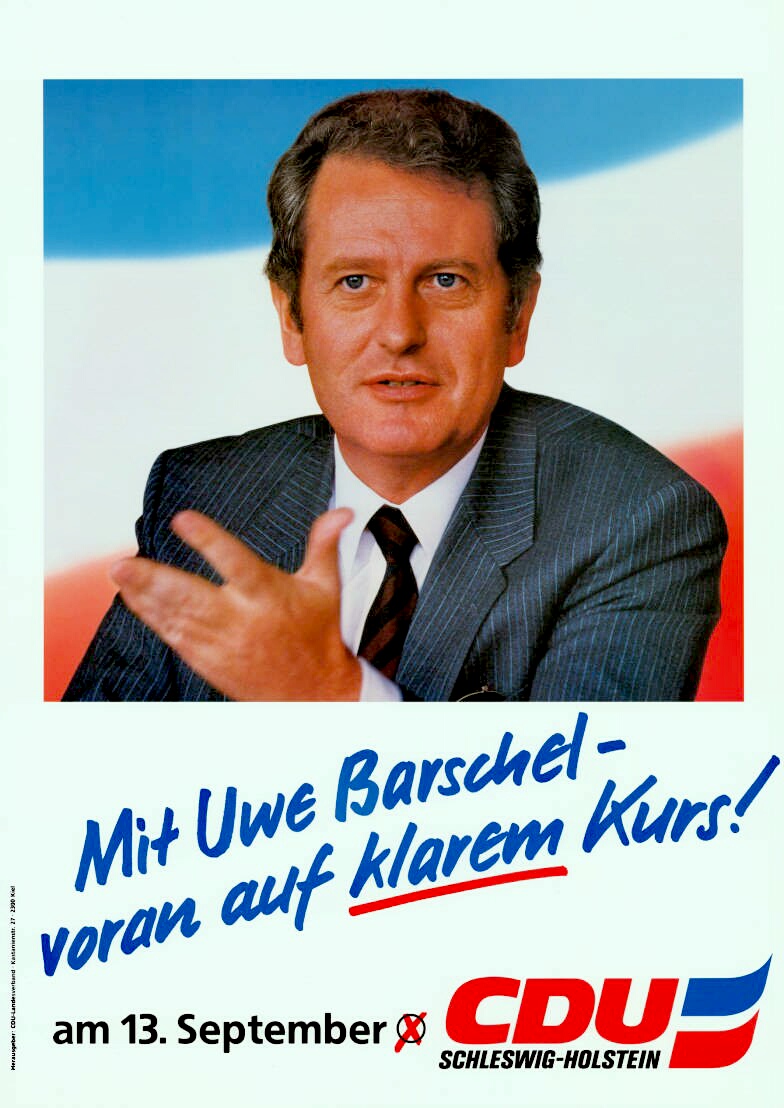
Affäre Barschel: Germany's Most Famous Political Scandal Unpacked
In the annals of German political history, few events resonate with the enduring intrigue and tragic dimensions of the Affäre Barschel. This infamous political scandal, which unfolded in September 1987 within the northern German state of Schleswig-Holstein, ultimately led to the resignation and mysterious death of its promising Minister-President, Uwe Barschel. More than just a tale of political miscalculation, the Affäre Barschel exposed the darker underbelly of ambition, deception, and the lengths to which some might go to secure power, cementing its place as arguably Germany's most famous political scandal.
Uwe Barschel: A Meteoric Rise and Unchecked Ambition
Before the scandal consumed him, Uwe Barschel was a figure of immense promise within Germany's Christian Democratic Union (CDU). Born in 1944, Barschel represented a new generation of post-war politicians. His career trajectory was nothing short of meteoric: by the age of 27, he was a CDU member of the state parliament (Landtag); by 34, the Minister of Finance; and shortly thereafter, Interior Minister. In 1982, at the remarkably young age of 38, he ascended to the coveted position of Minister-President of Schleswig-Holstein.
Under Barschel's leadership, the Schleswig-Holstein CDU achieved an absolute majority in the 1983 state elections, a testament to his perceived charisma and political acumen. He was widely regarded as a "great hope" for the CDU, a man of stature who many believed was destined for even higher office, perhaps even the Chancellery. However, beneath the polished exterior, shadows were beginning to form. Barschel's ambition was often described as boundless, his methods less than scrupulous, and his interactions with subordinates reportedly harsh and dismissive. He was a master of self-promotion, adept at cultivating a brilliant public image and forging strategic connections, but this relentless drive would ultimately prove to be his undoing.
The Looming Election and the Seeds of Deception
As the 1987 state elections approached in Schleswig-Holstein, the political landscape grew tense. Barschel found himself increasingly concerned about the surging popularity of his Social Democratic Party (SPD) rival, Björn Engholm. Adding to his anxieties was a growing wave of discontent among the region's farmers, a crucial demographic in the agriculturally rich state. Faced with the prospect of losing his majority and potentially his office, Barschel made a fateful decision: to discredit his opponent by any means necessary.
To execute this plan, Barschel engaged Reiner Pfeiffer, a journalist, through the government's press office. Pfeiffer's covert mission was to delve into Engholm's private life, digging for any information that could be used to tarnish his reputation. This illicit campaign involved several intrusive and unethical measures:
- Covert Tax Audit: Engholm became the unwitting subject of a discreet tax audit, a clear abuse of governmental power aimed at unearthing financial irregularities.
- Allegations of Homosexuality: Perhaps the most damaging and ethically reprehensible tactic was the attempt to uncover non-existent "homosexual tendencies" through discreet surveillance. In the conservative political climate of the time, such an insinuation was designed to severely undermine Engholm's public standing, regardless of its truthfulness.
When these initial investigations failed to yield the desired dirt, Barschel's desperation grew. He then concocted an even more bizarre scheme: to plant a listening device (a "bug") in his own telephone, arrange for its "accidental" discovery, and then falsely accuse Engholm's party of spying on him. The intent was to present himself as a victim of political espionage, thereby garnering sympathy and casting his opponent in a nefarious light.
The Bombshell Revelation and the "Ehrenwort"
The intricate web of deceit began to unravel on September 13, 1987, just one day before the election. Reiner Pfeiffer, the journalist hired for the dirty work, went public with the entire scandalous story, confessing his implicit complicity in the various illicit activities. The revelations sent shockwaves through Germany, exposing the inner workings of a ruthless political campaign.
On election day, the immediate impact was evident. The CDU, under Barschel, lost six of its 39 seats in the Landtag, while the SPD secured 36 out of 74. The political landscape of Schleswig-Holstein was irreversibly altered. Five days later, on September 18, 1987, facing immense public and media pressure, Uwe Barschel delivered a televised statement that would become one of the most iconic and tragic moments in German political history. He declared, with a visibly strained demeanor: "Ich gebe Ihnen mein Ehrenwort, dass die gegen mich erhobenen Vorwürfe haltlos sind." ("I give you my word of honor that the accusations raised against me are unfounded.")
His "Ehrenwort" (word of honor), supported by sworn affidavits, was a desperate attempt to salvage his reputation and regain the trust of the citizens of Schleswig-Holstein. In German culture, an "Ehrenwort" carries immense weight, implying an unshakeable commitment to truth and integrity. Yet, despite this powerful declaration, the allegations persisted, fueled by Pfeiffer's detailed confession. The public's trust had been irrevocably shattered. Just a week later, on September 25, Barschel bowed to the inevitable and resigned from his post.
The Tragic End and Enduring Mystery
The story of Uwe Barschel did not end with his resignation. On October 11, 1987, less than a month after his "Ehrenwort" and subsequent resignation, Uwe Barschel was found dead in room 317 of the Hotel Beau-Rivage in Geneva, Switzerland. The official cause of death was suicide, attributed to a lethal cocktail of prescription drugs. However, the circumstances surrounding his death have remained shrouded in mystery and have been the subject of intense speculation and numerous conspiracy theories for decades. Many questions persist about whether he truly took his own life or if other, more sinister forces were at play, possibly linked to alleged international arms dealings that some claim Barschel was involved in. This unresolved enigma only deepens the dark allure of the Affäre Barschel.
Lessons from the Affäre Barschel: The Price of Unethical Politics
The Affäre Barschel stands as a stark and enduring reminder of the perils of political ambition unchecked by ethical boundaries. Its legacy extends far beyond the borders of Schleswig-Holstein, offering profound insights into the nature of power, public trust, and the media's role in a democratic society.
- The Erosion of Trust: The scandal fundamentally eroded public trust in political figures and institutions. Barschel's "Ehrenwort," once a symbol of integrity, became synonymous with deceit. This highlights the fragility of public confidence and the long-lasting damage that can result from unethical conduct.
- The Dangers of Dirty Tricks: The meticulous planning of a smear campaign against Björn Engholm underscores the ruthless tactics that can emerge when the stakes are high. It serves as a cautionary tale about the ethical lines that should never be crossed in political competition.
- Media Scrutiny and Accountability: Reiner Pfeiffer's decision to expose the plot, despite his own involvement, demonstrated the crucial role of a free press in holding power accountable. The media's relentless investigation of the scandal ensured that the truth, however uncomfortable, eventually came to light.
- The Human Cost: Beyond the political fallout, the scandal had a devastating human cost. Uwe Barschel lost his career, his reputation, and ultimately his life, leaving behind a family and a legacy forever tainted by controversy.
The case of Uwe Barschel also sparked a broader discussion about the ruthless tactics sometimes employed in politics and the pressure politicians face in an increasingly competitive environment. While the specifics of the Affäre Barschel are unique to its time and place, the underlying themes of ambition, power, and ethics remain universally relevant in contemporary politics.
Conclusion
The Affäre Barschel remains etched in Germany's collective memory as a watershed moment in its political landscape. It is a story replete with ambition, betrayal, a dramatic public confession, and a tragic, unresolved death. Far from being a mere historical footnote, the scandal continues to fascinate and prompt reflection on the ethical standards expected of those in power. Its intricate details and lingering mysteries ensure that it will forever be remembered as Germany's most famous, and perhaps most haunting, political scandal.