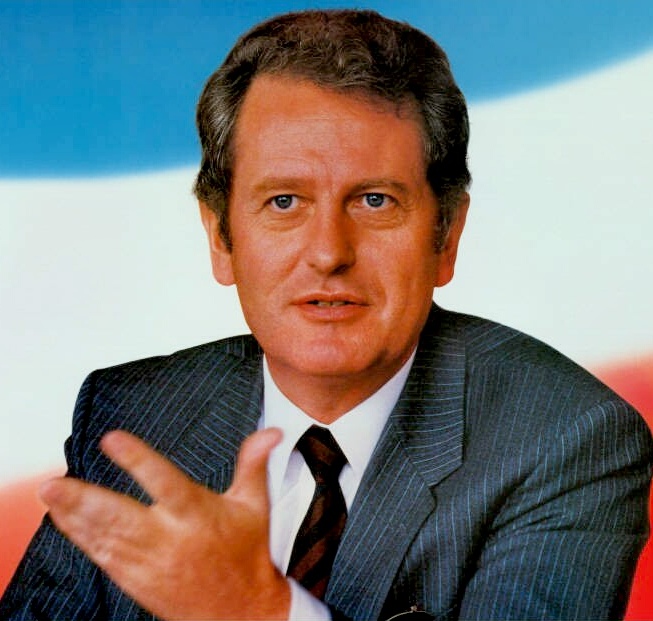
Uwe Barschel's Downfall: Espionage, Deception, and a Tragic End
The year is 1987, and German politics is about to be shaken to its core by a scandal that would forever embed itself in the nation's collective memory: the Affäre Barschel. This dramatic saga chronicles the meteoric rise and precipitous fall of Uwe Barschel, a charismatic and ambitious politician from the Christian Democratic Union (CDU), whose desperate attempts to secure victory led to a web of deception, a public confession, and ultimately, his untimely death. It's a tale that encapsulates the dark side of political ambition, the erosion of public trust, and the enduring power of a single, fateful decision.
The Meteoric Rise of a Political Prodigy
Uwe Barschel was not just any politician; he was a shining star, a beacon of hope for the CDU, and, by many accounts, a future candidate for the highest office in Germany. Born in 1944, Barschel navigated the post-war landscape with remarkable speed and intellect. His career path was nothing short of a "Blitzkarriere" – a lightning career:
- At just 27, he became a CDU member of the state parliament (Landtag).
- By 34, he was the Minister of Finance.
- Soon after, he ascended to Minister of Interior.
- In 1982, at the remarkably young age of 38, he took the helm as Minister-President of Schleswig-Holstein, succeeding Gerhard Stoltenberg.
Under Barschel's leadership, the Schleswig-Holstein CDU achieved an absolute majority in the 1983 state elections, solidifying his image as a political force. His intelligence was undeniable, his ability to connect and strategize unparalleled. He was a master of self-promotion, skillfully crafting a luminous public image. Yet, beneath the polished exterior, shadows were beginning to form. Whispers of his "ruthless ambition" and "unscrupulous methods" circulated. His interactions with subordinates were often described as brusque and dismissive, hinting at a darker, more authoritarian streak. From Barschel, it was said, one learned how to win.
Seeds of Discontent: The Path to Deception
Despite his previous successes, the 1987 state elections in Schleswig-Holstein presented Uwe Barschel with a significant challenge. The political landscape was shifting. His Social Democratic (SPD) rival, Björn Engholm, was gaining considerable popularity, posing a real threat to Barschel's seemingly unshakeable position. Adding to his anxieties was growing discontent among farmers, a crucial demographic in the heavily agricultural region Barschel governed. The pressure to maintain power, to live up to his winning reputation, weighed heavily upon him. This confluence of factors led Barschel down a treacherous path, prompting him to resort to tactics that would irrevocably shatter his career and reputation.
The Discrediting Campaign Against Björn Engholm
Driven by a desperate need to undermine his opponent, Barschel decided to orchestrate a smear campaign against Björn Engholm. He engaged Reiner Pfeiffer, a journalist through the government's press service, with a singular mission: to dig up dirt on his rival's private life. The tactics employed were disturbingly intrusive and unethical:
- Covert Investigations: Engholm was subjected to an undisclosed tax audit, an attempt to uncover any financial irregularities that could be used against him.
- Shadowing and Surveillance: Pfeiffer was tasked with discreetly trailing Engholm, hoping to uncover alleged homosexual tendencies – a fabrication, as these tendencies were non-existent, but a powerful potential weapon for discrediting a public figure in that era.
When these initial probes yielded no incriminating evidence, Barschel's desperation escalated. He devised an even more audacious scheme: to plant a listening device in his own telephone and then "discover" it, framing Engholm for illegal surveillance. The plan was not just to discredit Engholm but to portray himself as a victim of political espionage, thereby garnering sympathy and turning the tables on his adversary. Beyond the Ehrenwort: The Ruthless Tactics of Minister-President Barschel reveals the depth of this elaborate deception.
The Unraveling: "My Word of Honor" and Resignation
The carefully constructed edifice of deception began to crumble on September 13, 1987. On the eve of the election, Reiner Pfeiffer, the journalist hired to execute Barschel's dirty tricks, broke ranks. In a sensational press conference, Pfeiffer exposed the entire sordid plot, revealing all the intricate details of the campaign against Engholm, admitting his implicit complicity in the scheme. The revelations sent shockwaves through Germany, rocking the political establishment and electrifying the public.
The immediate political fallout was devastating. On election day, the CDU lost six of its 39 parliamentary seats, while the SPD gained significant ground. Barschel, now with his back against the wall, made a last-ditch effort to salvage his reputation. On September 18, 1987, in a moment forever etched in German political history, he declared with solemn gravity: "Ich gebe Ihnen mein Ehrenwort, dass die gegen mich erhobenen Vorwürfe haltlos sind" ("I give you my word of honor that the accusations against me are baseless"). He appeared visibly flustered, struggling to maintain composure, desperate to project an image of a righteous politician wronged by slander. He offered sworn affidavits, trying to reassure the "citizens of Schleswig-Holstein."
His "Ehrenwort" – a pledge of honor – was a powerful rhetorical tool, a desperate gamble to regain trust. But the public, and indeed many within his own party, were no longer convinced. The weight of Pfeiffer's revelations and the compelling evidence proved too much. Just seven days after his dramatic pledge, on September 25, Barschel finally succumbed to the immense pressure and tendered his resignation.
A Tragic End: Barschel's Death and Lingering Questions
A mere month after his "Ehrenwort" speech, Uwe Barschel had lost everything: his reputation, his honor, his career, and ultimately, his life. On October 11, 1987, he was found dead in a hotel room in Geneva, Switzerland. The official verdict was suicide by drowning in the bathtub, attributed to an overdose of sleeping pills. He was 43 years old.
However, Barschel's death immediately ignited a firestorm of speculation and controversy that persists to this day. The circumstances surrounding his demise were, to many, too convenient, too mysterious. The official suicide verdict has been challenged repeatedly by investigative journalists, family members, and various legal inquiries. Theories ranged from foul play by intelligence agencies to murder orchestrated by shadowy figures tied to international arms deals – allegations that, while never definitively proven, underscore the profound distrust and questions left in the wake of the scandal. The image of the brilliant young politician, once seen as a future chancellor, lying dead in a distant hotel room, remains one of Germany's most haunting political enigmas, a stark reminder that some chapters of history refuse to be fully closed.
The Enduring Legacy of the Affäre Barschel
The Affäre Barschel transcended a simple political misstep; it became Germany's most famous political scandal, leaving an indelible mark on the nation's political consciousness. Its legacy is multifaceted:
- Erosion of Trust: The scandal profoundly damaged public trust in politicians and the democratic process. Barschel's blatant deception, followed by his false "Ehrenwort," demonstrated the lengths to which some might go to cling to power, shaking faith in the integrity of public office.
- Media's Role: It highlighted the critical role of a free and investigative press in holding power accountable. Pfeiffer's revelation, despite his initial complicity, ultimately brought the truth to light.
- A Cautionary Tale: For aspiring politicians, the Affäre Barschel serves as a stark warning about the perils of unchecked ambition and unethical conduct. It underscores that even the most brilliant careers can be destroyed by a single lapse in judgment and integrity.
- Persistent Mystery: The unresolved questions surrounding Barschel's death continue to fuel public fascination and conspiracy theories, ensuring the scandal remains a subject of debate and historical analysis.
The Barschel case forced a painful introspection within German politics about ethics, accountability, and the boundaries of competitive campaigning. It cemented the idea that while political battles can be fierce, there are lines that must not be crossed, and the consequences of transgressing them can be catastrophic.
The Affäre Barschel remains a powerful narrative of hubris, political dirty tricks, and a tragic end. Uwe Barschel, once hailed as the great hope of the CDU, instead became a symbol of how unchecked ambition can lead to personal and political ruin, forever cementing his story as one of the darkest chapters in German political history.